Posted on August 14, 2026
A straighter smile is often the first thing people think about when they hear “orthodontics.” But teeth also need to meet in a way that lets you bite, chew, and speak comfortably, and that part of treatment is just as important. If the upper and lower teeth do not fit together well, you may notice it when you chew on one side, bite into a sandwich, or realize certain teeth seem to be doing more work than the rest.
At Harnick Orthodontics in Albuquerque, NM, Dr. Kari Harnick Graeber and Dr. David Harnick look at more than whether teeth are crowded or crooked. They also look at how the bite closes, whether certain teeth are taking too much pressure, how the jaws line up, and whether you have been working around the bite without really thinking about it. Sometimes the straighter smile is the most visible result, but the easier chewing and more even contact between the teeth are what you notice once treatment is underway.
Maybe your front teeth do not meet, your back teeth hit before the rest of the bite settles, or you have always moved tougher foods to the same side. After years of doing that, it may just feel normal. Orthodontic treatment can improve how the teeth fit together so the same few teeth are not constantly handling more pressure than the rest.
In a healthy bite, the upper and lower teeth meet in a balanced way. The back teeth do most of the grinding and crushing, while the front teeth help you bite through food. When those contacts are off, certain teeth may take more pressure while others barely touch.
For example, one molar may hit first every time you close, or the front teeth may slide against each other in a way that wears down the edges. Over time, that extra pressure can leave teeth flatter, chipped, or more sensitive. Meanwhile, the rest of the bite may be doing less than it should.
Dr. Harnick Graeber and Dr. Harnick also look at how the jaws relate to one another, because teeth can appear fairly straight from the front while the bite is still uneven. Because of that, orthodontic planning is not just about lining up the smile. We also want to know how those teeth behave when you actually close, chew, and move your jaw.
Crowded teeth are easy to notice in the mirror, but the bite can be affected too. When teeth overlap or twist, some may meet at odd angles or take pressure differently from the teeth around them. Tight spaces can also make brushing and flossing harder, especially where one tooth sits partly behind another.
So, straightening crowded teeth can improve more than appearance. It can make it easier to reach between teeth at home and help those teeth meet in a more even pattern. That is a practical change you may notice every morning and night, not just when you smile.
Crowding can also make one side of the bite feel easier to use than the other. If you have been chewing mostly on one side for years, you may never have thought much about why. Once we look at the bite closely, however, tooth position may explain part of that habit.
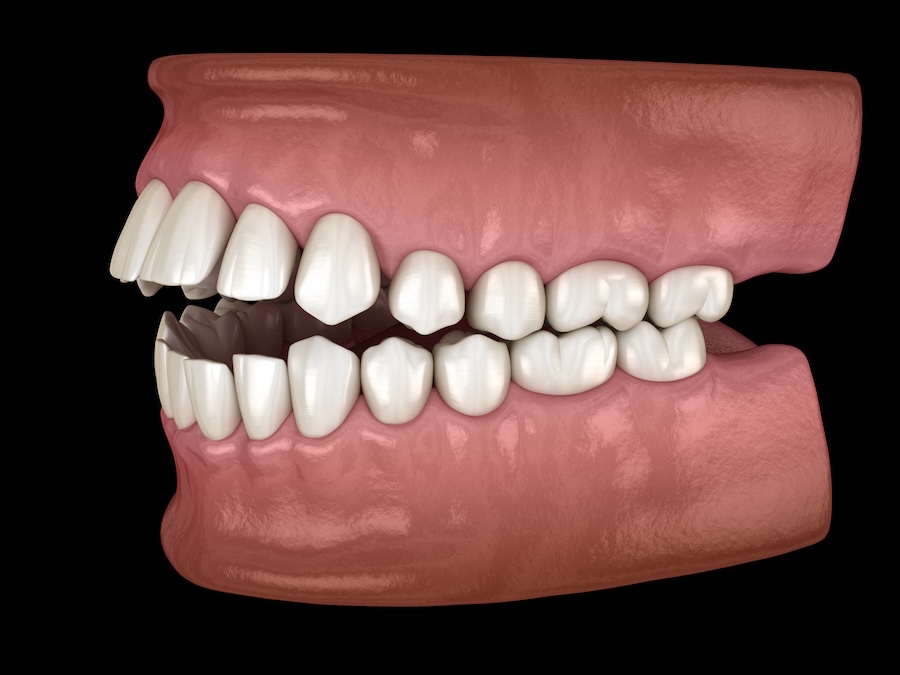
An overbite describes how far the upper front teeth overlap the lower front teeth when you close. Some overlap is normal. However, if the upper teeth cover too much of the lower teeth, the bite is deeper than it should be.
With a deep bite, the lower front teeth may rub heavily against the backs of the upper teeth, and in more severe cases they can even contact the gum tissue behind them. Over time, the front teeth may wear down, flatten, or chip. You may notice the edges getting shorter before you ever realize the bite is contributing to it.
Orthodontic treatment can improve that overlap and give the front teeth a healthier relationship. Depending on the bite, treatment may involve braces, clear aligners, elastics, or other orthodontic mechanics. The approach depends on how the teeth and jaws are positioned at the start.
With an underbite, the lower front teeth sit in front of the upper front teeth when you close. That changes how the front teeth bite through food and can also affect the way the jaw moves during chewing. Some people notice that biting into foods feels awkward even if they have never put a name to the bite itself.
The back teeth may also meet unevenly, depending on the jaw relationship. One side may contact heavily while another barely meets, which can make chewing feel less balanced. Because of that, certain teeth may end up wearing faster than the ones around them.
Orthodontic treatment can sometimes improve an underbite by moving the teeth into better positions. However, if the jaw difference is more significant, treatment may need to address more than tooth movement alone. Dr. Harnick Graeber and Dr. Harnick can explain what part of the underbite comes from the teeth and what part comes from the jaw position.
A crossbite happens when one or more upper teeth bite inside the lower teeth instead of outside them. It may involve a single tooth or a larger section of the bite. Because the contact is reversed, those teeth can take pressure from directions they normally would not.
You might notice one tooth wearing faster, a gumline changing around a tooth that sits too far outward, or a bite that seems to favor one side. Sometimes the jaw even shifts slightly to one side when you close because that is where the teeth fit together more comfortably. Still, the shift may be subtle enough that you have been doing it for years without realizing it.
Correcting a crossbite can bring those teeth into a better relationship and reduce that uneven contact. For growing children, certain crossbites may be addressed earlier while the jaws are still developing. For adults, treatment depends on how much of the problem comes from tooth position and how much comes from the jaw.
An open bite means some upper and lower teeth do not meet when the mouth closes. Often, the front teeth are the ones left apart, even though the back teeth are touching. That can make biting into foods like sandwiches, pizza, lettuce, or a thin piece of fruit surprisingly awkward.
People usually find a workaround. You may tear food with the side teeth, push food farther back before biting, or use your tongue more than expected to help manage it. After a while, you may not notice the extra effort until someone points out how little the front teeth are actually doing.
Orthodontic treatment can help bring those teeth into contact again. However, we also look at why the open bite developed, because tongue position, habits, tooth position, and jaw growth can all play a role. Treating the cause along with the tooth position gives the bite a better chance of staying stable.
Gaps between teeth are often viewed as a cosmetic concern, but they can affect how teeth contact one another and how food moves through the bite. Some spaces collect food constantly, while others are tied to missing teeth or differences in tooth size. So, the spacing itself is only part of what we look at.
Not every gap needs to be closed. Sometimes the spacing is harmless and simply part of the smile. However, if it is connected to a missing tooth, bite problem, or tooth that is much smaller than the one beside it, orthodontic treatment may help create better spacing.
In some cases, the goal is actually to create or preserve space rather than close it. For example, if an implant or crown will eventually replace a missing or undersized tooth, orthodontics can position the surrounding teeth first. Then the restoring dentist has the right amount of room to work with later.
When a bite is uneven, some teeth can take the first hit every time you close. One front tooth may keep chipping, a molar may flatten faster than the teeth beside it, or an old filling may seem to take more punishment than it should. If that same area keeps needing repairs, the bite underneath deserves a look.
Moving the teeth into better positions can spread pressure more evenly. That does not rebuild enamel that has already worn away, but it can give future dental work a better setup. If a worn tooth later needs bonding or a crown, it is better to restore it after the bite has been improved than to put the new restoration back into the same heavy contact.
Sometimes this also explains why a tooth keeps breaking even when the repair itself was done well. The filling or bonding may not be the real problem. The tooth may simply have been taking the first hit for years.
When the bite fits more evenly, you are less likely to keep moving food to one side or avoiding certain areas because they do not meet comfortably. For some patients, one of the first changes they notice is that both sides of the mouth finally feel available during a meal. That can be especially noticeable with tougher foods.
Maybe you have always moved crusty bread to the right side, or you avoid biting directly into an apple because the front teeth do not meet well. Those habits may seem small, but they can tell us a lot about how the bite is functioning. Because they become so familiar, people often stop noticing them until treatment changes the pattern.
As the teeth move into better positions, chewing can start to feel more balanced. The change is gradual, but it can be a very practical one. You may simply realize one day that you are no longer planning every bite around the same few teeth.
Orthodontic treatment is not a guaranteed treatment for jaw pain, because soreness can have many causes. However, the way the teeth fit together can influence how the jaw moves and where pressure falls during chewing. If one side hits first or the jaw has to shift to find a comfortable closing position, that is worth looking at.
Some patients notice muscle fatigue, soreness after chewing, or a feeling that the bite never lands in quite the same place twice. Others have no jaw symptoms at all, even with a significant bite problem. Because of that, we do not assume every jaw complaint is orthodontic.
Dr. Harnick Graeber and Dr. Harnick can look at how the teeth meet and whether orthodontic movement could improve that relationship. If the discomfort seems to be coming from something else, then another type of evaluation may be appropriate. Either way, it is helpful to mention what you are feeling instead of treating it as unrelated.
The teeth, lips, and tongue all work together when you speak. Certain bite problems can change where the tongue lands or how air moves through the front of the mouth. Because of that, some patients may notice differences with certain sounds.
Open bites and larger spaces near the front are two examples where speech may be affected. You may notice more air escaping during certain words or find that the tongue pushes forward between the teeth. Still, not every speech difference comes from tooth position, so orthodontic treatment is not automatically the answer.
If speech is one of your concerns, mention it during the evaluation. Dr. Harnick Graeber and Dr. Harnick can consider how the bite may be contributing and whether another specialist, such as a speech therapist, should be involved. That keeps the treatment focused on what orthodontics can actually improve.
Both braces and clear aligners can move teeth into better positions, and both can be used to correct many bite problems. Which one works better depends on the movements needed, the complexity of the bite, and how consistently the appliance has to be worn.
Braces stay on the teeth, so they are working around the clock. Clear aligners are removable, which makes eating and brushing easier, but they need to be worn as directed. An aligner sitting on the bathroom counter may be very clean, but it is not moving any teeth.
Some bite corrections also use elastics or other appliances along with braces or aligners. Those extra pieces help guide how the upper and lower teeth fit together. If they are part of your treatment, Dr. Harnick Graeber or Dr. Harnick can explain what they are doing and why consistent wear affects the result.
Some bite problems are easier to address while a child is still growing. Certain crossbites, jaw growth patterns, or severe crowding may be better managed before growth is complete, although that does not mean every child needs early treatment. Timing depends on what is developing and how quickly it is changing.
An orthodontic evaluation can help us watch how the permanent teeth are coming in and how the jaws are developing. Sometimes treatment should start early. Other times, however, the better choice is to monitor growth and wait until more permanent teeth are in place.
For parents, that can make the process feel more manageable because an evaluation does not automatically mean braces are starting next week. Sometimes the appointment is simply about knowing what is developing and when we may want to step in. Then you can plan ahead instead of being surprised later.
Orthodontic treatment is not limited to children and teenagers. Adult teeth can still be moved, and many adults seek treatment because the bite has become more noticeable over time. Teeth may have shifted, older dental work may be getting harder to protect, or chewing may not feel as even as it once did.
Orthodontics can also be part of preparing for restorative dental work. For example, it can create better room for an implant, move a tilted tooth upright before a bridge, or improve the bite before crowns are placed. In those cases, the orthodontic work helps set up the next phase of dental treatment.
Existing crowns, missing teeth, or gum concerns can make planning a little more involved, but they do not automatically rule treatment out. Dr. Harnick Graeber and Dr. Harnick can plan around the dental work you already have and coordinate with your general dentist when needed.
Once the teeth are in their new positions, retainers help keep them there. Teeth naturally tend to shift over time, so retention protects both the straighter smile and the bite correction you worked for.
Some retainers are removable, while others may be bonded behind the teeth. The type depends on your treatment and what needs to stay stable. Either way, wearing and caring for the retainer as directed is part of keeping the result.
And if a retainer disappears somewhere between a nightstand, backpack, and laundry basket, let us know sooner rather than later. Teeth can begin shifting before the retainer has had much time to be officially declared missing. Replacing it early is much easier than trying to move teeth back later.
If your teeth look crooked but you are also dealing with uneven wear, awkward chewing, a front bite that does not meet, or one side that seems to do most of the work, come see us at Harnick Orthodontics in Albuquerque. Dr. Kari Harnick Graeber and Dr. David Harnick can look at how your teeth line up and how the upper and lower bite fit together. From there, they can explain what orthodontic treatment may be able to improve.
Tell us what you notice during ordinary meals too. Maybe you always move crusty bread to one side, your front teeth cannot bite cleanly through certain foods, or one tooth seems to chip no matter how many times it is repaired. Those everyday details can tell us quite a bit about how your bite is behaving outside the office.
If you are considering orthodontic treatment, schedule a visit with Harnick Orthodontics in Albuquerque. We can take a closer look at the bite, explain what may be changed, discuss life with braces, and talk through whether braces, clear aligners, or another approach fits your needs. We’d be happy to welcome you in and help you build a bite that feels better to use every day!
A Special Announcement!
Our orthodontic family is growing! Dr. Kari is excited to welcome a new baby this September and will be taking maternity leave through October.
During this time, treatment will continue as planned under the care of Dr. Harnick, who founded the practice and has helped create the exceptional patient experience you know and trust. Your orthodontic progress will remain on schedule, and our team will be here to support you every step of the way.
Dr. Kari will return in November and can't wait to catch up with everyone and see all the great progress that's been made!
Thank you for celebrating this exciting chapter with us!