Posted on February 17, 2026
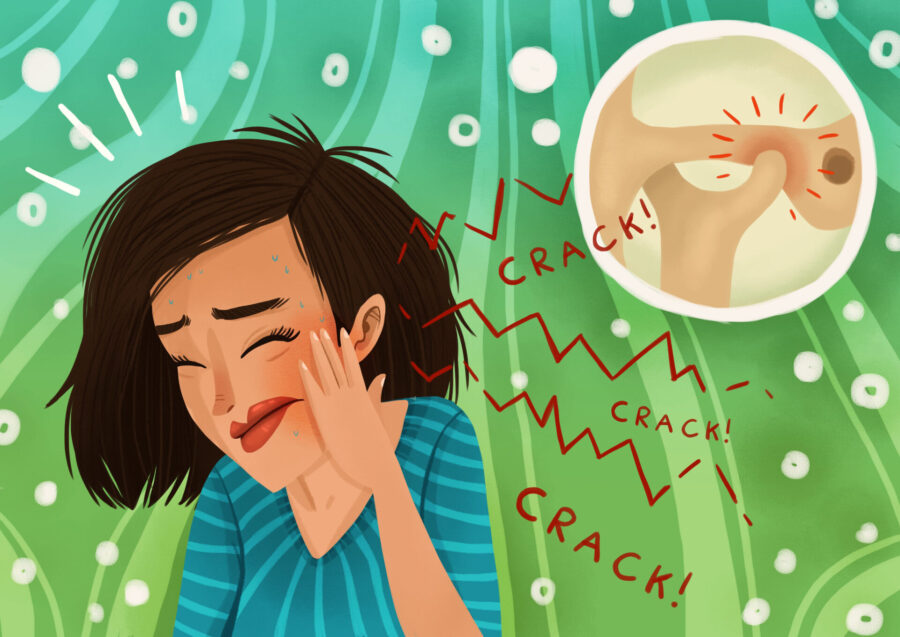
Jaw pain. Clicking. Headaches that seem to start near your temples. If you’ve been dealing with symptoms like these, you may have heard the term “TMJ disorder.” What many people don’t realize is that, for some patients, bite alignment plays a role.
At Harnick Orthodontics in Albuquerque, NM, Dr. Kari Harnick Graeber and Dr. David Harnick evaluate how the teeth and jaw work together. While orthodontics is often associated with straight smiles, in certain cases, improving alignment can also reduce strain on the jaw joints.
Here are answers to some of the most common TMJ treatment questions.
TMJ refers to the temporomandibular joint — the hinge that connects your lower jaw to your skull. TMJ disorder (often called TMD) occurs when the joint or surrounding muscles become irritated, inflamed, or strained.
Common symptoms include:
TMJ symptoms can range from mild and occasional to persistent and uncomfortable.
In some cases, yes.
When your upper and lower teeth don’t fit together properly, your jaw may shift slightly every time you close your mouth. Over time, that repeated compensation can strain the joint and surrounding muscles.
Examples of bite issues that may contribute to TMJ stress include:
Not everyone with a misaligned bite develops TMJ disorder. However, for certain patients, correcting alignment can reduce uneven pressure and improve joint function.
Orthodontic treatment works by gradually guiding teeth into more balanced positions. When the bite becomes more even, the jaw may no longer need to shift or compensate during chewing and speaking.
For some patients, this can:
Clear aligners or braces may be recommended depending on the case. The goal is not just straighter teeth, but a bite that functions more smoothly.
It’s important to note that orthodontics is not a universal cure for TMJ disorder. However, when bite alignment is a contributing factor, improving that alignment can play a meaningful role in symptom relief.
Not necessarily.
TMJ disorders can have multiple causes, including grinding (bruxism), stress-related muscle tension, trauma, arthritis, or structural disc issues inside the joint. Orthodontic treatment is most helpful when the bite itself is part of the problem.
During your consultation at Harnick Orthodontics, Dr. Graeber and Dr. Harnick will assess:
If orthodontics is appropriate, it will be recommended as part of a comprehensive plan.
Depending on your symptoms, treatment may also include:
TMJ care is often conservative at first, focusing on reducing inflammation and protecting the joint.
You may benefit from an orthodontic evaluation if:
A detailed exam can determine whether alignment is contributing to the strain.
Jaw clicking or discomfort doesn’t automatically mean you need orthodontic treatment. But if bite misalignment is contributing to your symptoms, improving alignment may reduce strain and help your jaw function more comfortably.
At Harnick Orthodontics in Albuquerque, NM, Dr. Kari Harnick Graeber and Dr. David Harnick evaluate both aesthetics and function. If you’re experiencing jaw pain, clicking, or bite concerns, schedule a consultation to find out whether alignment is part of the bigger picture for your symptoms.
Image from Authority Dental under CC 2.0
"Dear Patients,
I am writing to share an important update about our practice. After much thought and consideration, I have made the very difficult decision to consolidate our two locations into one main office at Montgomery Pkwy. This was not a decision I made lightly, as I know how important convenience and continuity are for our patients and families.
Please know that my patients remain my top priority, and I want to ensure that no one feels left without support during this transition. To help with this, I worked out an arrangement with the new owner of the Golf Course Rd. office that will allow me to continue seeing patients there for a period of time after the transition.
Appointments at the Golf Course office will be limited.
Preference will be given to patients who began treatment at the Golf Course location.
Over time, most patients will transition fully to our Montgomery Pkwy office.
This arrangement was made with you in mind—to provide continuity of care and make the transition as smooth as possible.
I want to thank you for trusting us with your orthodontic care. I am committed to seeing you through your treatment and look forward to continuing your journey at our Montgomery Pkwy location.
If you have any questions about scheduling or the transition, please do not hesitate to reach out to our office.
With gratitude,
Kari Harnick Graeber DDS, MS
Harnick Orthodontics"